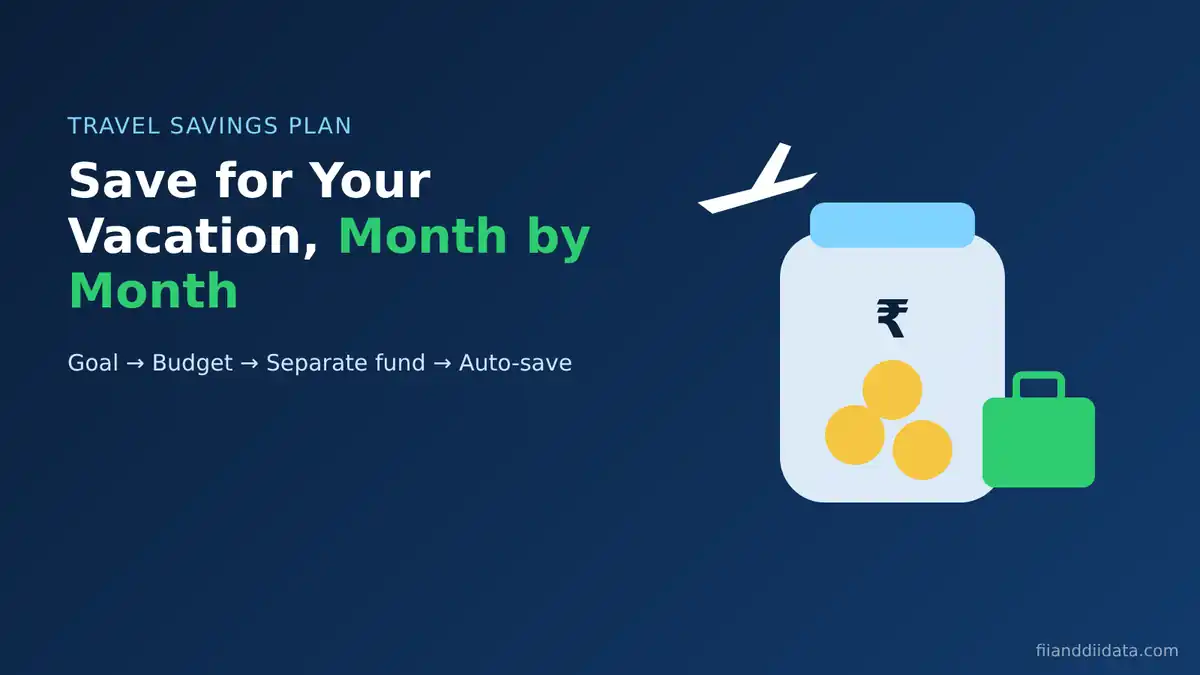
Knowing how to save money for a vacation comes down to three things: put a price on the trip, divide it by the months you have left, and move that amount into a separate fund every payday. A family trip that costs ₹1.5 lakh and is 12 months away needs about ₹12,500 a month. Start today and you can pay for the whole holiday in cash, with no EMI or card bill waiting when you get home.
Key Takeaways
- Price the full trip first, then add a 5% to 10% buffer for things you forget.
- Monthly saving = total trip cost divided by the months left before you travel.
- Keep the vacation fund apart from your emergency fund and your salary account.
- Match the product to the trip date: savings account for under 6 months, bank RD or FD for 6 to 24 months.
- Union Budget 2026-27 announced a flat 2% TCS on overseas tour packages, down from 5% and 20% (PIB, 1 February 2026).
Table of contents
- What a vacation fund is and why it works
- Put a real price on your trip
- How to save money for a vacation: your monthly target
- Where to keep your vacation savings
- Where to find the money each month
- Saving for an international trip: TCS, forex and LRS
- Common mistakes to avoid
- How to save money for a vacation: quick checklist
- FAQs
- The Bottom Line
What a Vacation Fund Is and Why It Works
A vacation fund is money set aside for one trip, with a target amount and a target date. Financial planners call this a sinking fund: you save small, fixed amounts in advance for a known future expense, so the bill does not hit one month’s budget all at once.
The alternative is what many people do: book on a credit card, convert it to EMIs, and keep paying for the trip months after the photos are posted. That route adds interest and processing fees to the cost of the holiday. Saving first turns the same trip into a fixed, known cost with no interest at all.
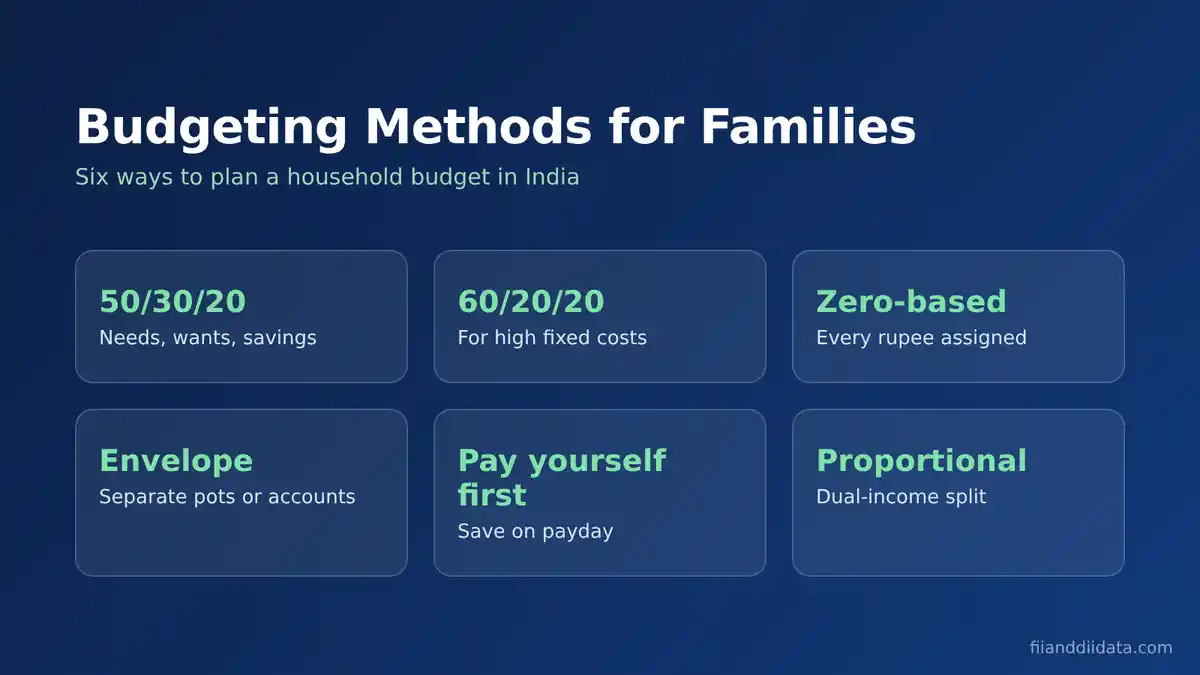
A dedicated fund also protects your other goals. If you already follow a plan like the 50/30/20 budgeting rule, travel sits inside your “wants” bucket. A separate fund stops that bucket from spilling into rent, EMIs or your long-term savings. The next step is to work out what the trip will cost.
Put a Real Price on Your Trip
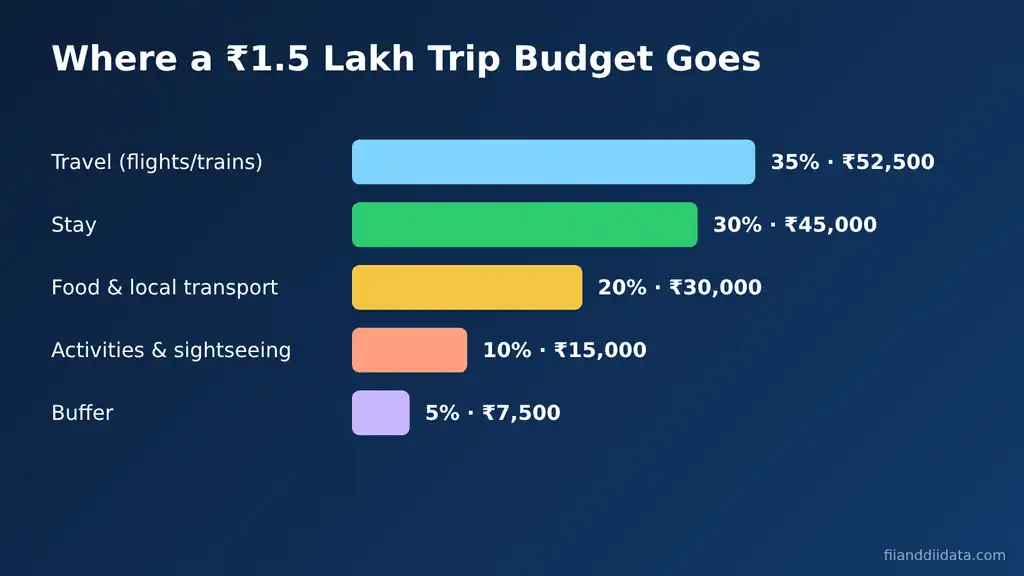
Most travel budgets fail because they only count flights and hotels. List every cost before you set a target. A simple way is to split the budget into five heads and check current prices for each one online.
| Budget head | Share (example) | Amount on ₹1,50,000 | What it covers |
|---|---|---|---|
| Travel | 35% | ₹52,500 | Flights or trains, airport cabs |
| Stay | 30% | ₹45,000 | Hotels or homestays, taxes |
| Food and local transport | 20% | ₹30,000 | Meals, local cabs, fuel |
| Activities | 10% | ₹15,000 | Entry tickets, tours, shopping |
| Buffer | 5% | ₹7,500 | Price rises, delays, small emergencies |
Two items are easy to miss. First, travel insurance, which is worth pricing in for any international trip. Second, the cost of the days before and after the trip, such as pet care, a new suitcase or visa fees. Put these in the buffer line if they do not fit elsewhere.
Once you have a total, you can turn it into a monthly number. That is where the plan becomes real.
How to Save Money for a Vacation: Your Monthly Target
The basic formula is simple: monthly saving equals total trip cost divided by the number of months left. Interest earned on the fund can lower that figure slightly, but the formula without interest is the safer number to plan around.
Worked example: how to save money for a vacation 12 months away
Priya and Arjun want a ₹1,50,000 family holiday exactly 12 months from now.
- Without interest: ₹1,50,000 ÷ 12 = ₹12,500 a month.
- With interest: if the fund earns an assumed 6% a year, compounded monthly, a deposit of about ₹12,099 a month reaches ₹1,50,000. They put in ₹1,45,188 and interest adds roughly ₹4,812 before tax.
- Longer trip, longer runway: a ₹3,00,000 international trip 18 months away needs ₹16,667 a month without interest, or about ₹15,890 at the same assumed 6%.
The 6% figure is only an assumption for the example. Check your bank’s current recurring deposit rate before you plan, because rates change and interest is taxable at your slab rate. The gap between the two numbers is small, so treat interest as a bonus, not as part of the plan.
If the monthly figure feels too high, you have three levers: push the date back, trim the budget, or find extra cash each month. The section after next covers the third option. First, decide where the money will sit.
Where to Keep Your Vacation Savings
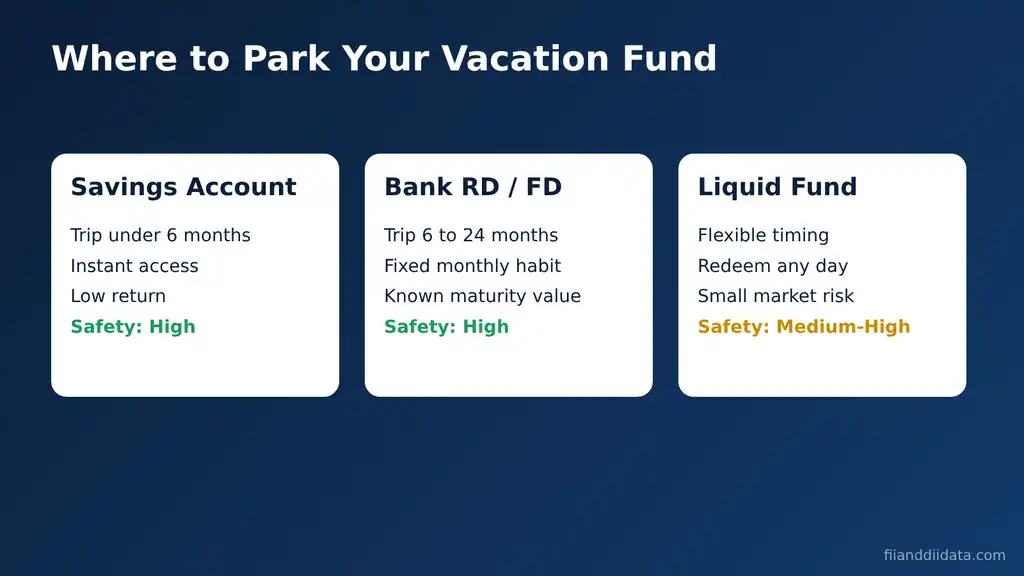
A vacation fund has a fixed date, so safety and access matter more than return. Avoid equity funds for a trip that is less than three years away, because a market fall just before you travel can leave you short. The table below compares common choices.
| Option | Best for | Key facts (dated) | Watch out for |
|---|---|---|---|
| Separate savings account | Trips under 6 months | Post Office Savings Account: 4% a year (India Post, checked November 2026) | Easy to dip into for other spending |
| Bank recurring deposit (RD) | Trips 6 to 24 months away | Fixed monthly instalment; tenure you choose; rate varies by bank | Penalty if you break it early |
| Bank fixed deposit (FD) | When you already have a lump sum | Pick a tenure that ends just before the trip | Premature withdrawal penalty |
| Post Office RD | Not suited to short trips | 6.7% a year, compounded quarterly (India Post, checked November 2026); runs five years; premature closure only after 3 years (NSI) | Lock-in is too long for most holidays |
| Liquid mutual fund | Flexible dates | Invests only in debt and money market instruments with maturity up to 91 days (SEBI rule, as stated in scheme documents) | Small market risk; a graded exit load applies for the first 6 days |
One point surprises many savers. The Post Office RD pays a good rate, but according to the National Savings Institute it matures after five years and can only be closed early after three years, with interest at the lower savings account rate. For a holiday next year, a bank RD with a 12-month tenure is the cleaner fit.
Never use your emergency money for travel. If you have not built one yet, read our guide on how to build an emergency fund and fund that first.
Where to Find the Money Each Month
Very few people have ₹12,500 lying idle each month. The money usually comes from small changes across several heads. Here are the ones that tend to work.
- Pay the trip first. Set a standing instruction for the salary date, so the transfer happens before you can spend the money.
- Audit subscriptions. Streaming, apps and gym plans you rarely use can free a few hundred rupees a month each.
- Cut one big bill. Rent, electricity and groceries are the largest heads for most households. Our posts on how to reduce monthly expenses show where to start.
- Route windfalls to the fund. Bonuses, tax refunds and gift money can cover several months of saving in one go.
- Use card rewards carefully. Cashback or points can lower the trip cost, but only if you pay the full card bill every month.
For a fuller monthly system, see how to save money every month. The same habits that build a vacation fund also build every other goal.
Saving for an International Trip: TCS, Forex and LRS
Foreign trips carry costs that domestic ones do not. Plan for them early so the fund does not fall short at the booking stage.
Tax collected at source (TCS) on tour packages
When you buy an overseas tour package from an Indian operator, the seller collects tax at source (TCS) on the amount. The Union Budget 2026-27 tax reforms note says the TCS rate on overseas tour packages is reduced to 2% from the earlier 5% and 20%, with no minimum amount, as confirmed in a PIB release dated 1 February 2026. On a ₹3,00,000 package, 2% works out to ₹6,000, compared with ₹15,000 at the old 5% rate.
TCS is not an extra cost in the end. It is credited against your tax and you can claim it when you file your return. It does, however, need cash at the time of booking, so keep it in the fund. Confirm the rate your tour operator applies on the day you book.
LRS limit and forex costs
Under the Liberalised Remittance Scheme, a resident can remit up to USD 2,50,000 per financial year (April to March), and private visits abroad are a permitted purpose, except visits to Nepal and Bhutan, according to the RBI. Most family holidays sit far below that ceiling.
The bigger leak is the forex markup on cards. If your card charges, say, 3.5% on foreign spends, ₹1,00,000 of spending abroad costs an extra ₹3,500. Check the markup on your card or a forex card before you leave, and add that cost to the buffer line.
Common Mistakes to Avoid
- Saving in the main salary account. Money you can see gets spent. Keep the fund somewhere separate.
- Ignoring the buffer. Airfares and hotel rates rise close to holidays and long weekends.
- Locking money past the trip date. A deposit that matures after you travel forces an early closure and a penalty.
- Taking market risk on a short goal. Equity prices can drop sharply in a few weeks, and you cannot afford that just before a trip.
- Booking on EMI “just this once”. It adds interest and can push your other savings off track.
Weddings, house deposits and school fees follow the same logic. Our guide on saving money for a wedding applies the same sinking-fund method to a much bigger goal.
How to Save Money for a Vacation: Quick Checklist
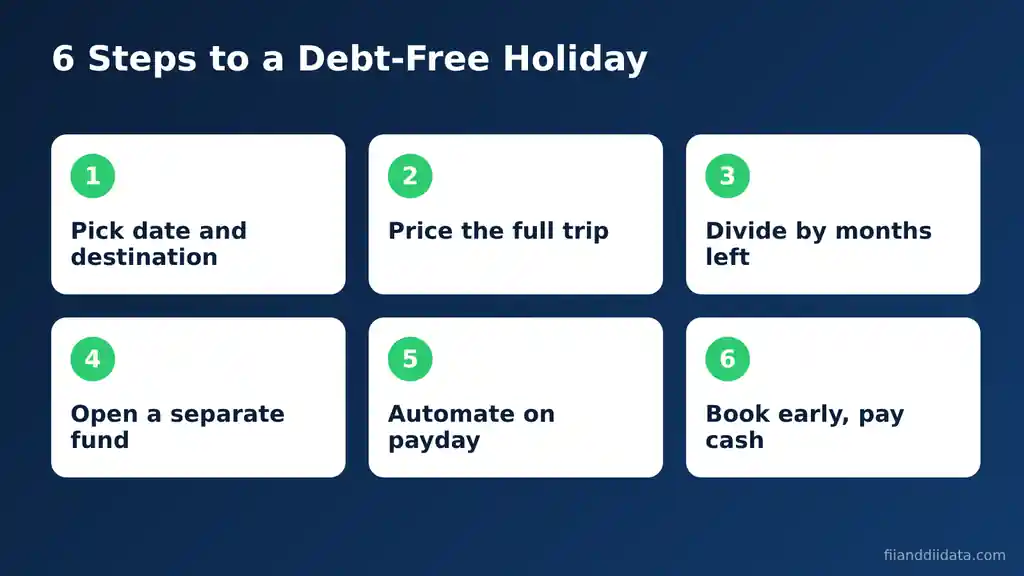
Use this list to set up the fund in one sitting.
- Pick the destination and the month of travel.
- Price travel, stay, food, activities and a 5% to 10% buffer.
- Add insurance, visa fees and, for packages abroad, TCS at the current rate.
- Divide the total by the months left to get the monthly target.
- Choose the product: savings account, bank RD or FD that matures before the trip.
- Set a standing instruction for the day after salary credit.
- Review the fund every three months and adjust if prices change.
- Book early from the fund and pay in full.
FAQs
How to save money for a vacation in 6 months?
Add up the full trip cost with a 5% to 10% buffer, divide it by six, and transfer that amount to a separate savings account on every salary date. For a short goal like this, keep the money in a savings account or a short bank FD, not in equity.
How much should I save for a vacation each month?
Divide the total trip cost by the months left before you travel. A ₹1,50,000 trip 12 months away needs ₹12,500 a month. Interest on an RD can trim this slightly, but plan with the no-interest figure.
Is a recurring deposit good for vacation savings?
A bank RD suits trips 6 to 24 months away because it builds a fixed monthly habit and you know the maturity value. Choose a tenure that ends before your travel date. The Post Office RD runs for five years, so it is not a good fit for most holidays.
Is TCS charged on international tour packages?
Yes. Union Budget 2026-27 announced a flat 2% TCS on overseas tour packages, down from 5% and 20%, with no minimum amount (PIB, 1 February 2026). TCS can be claimed against your tax when you file your return.
Should I take a loan or EMI for a vacation?
It is better to avoid it. A loan or card EMI adds interest and fees to the cost of the trip and keeps you paying after you return. Saving in advance makes the same trip cheaper.
The Bottom Line
Saving for a holiday is not about earning more. It is about pricing the trip honestly, turning it into a monthly number, and moving that amount out of reach on payday. A separate fund in a safe product, timed to mature before you travel, does most of the work.
For trips abroad, add TCS, forex markup and insurance to the plan from day one. Your next step: price your next trip tonight, divide by the months left, and set up the standing instruction before your next salary credit. For more money guides, visit the FIIAndDIIData.com blog.
Sources: PIB, Ease of Living by Direct Tax Reforms, Union Budget 2026-27 (1 February 2026); Budget 2026 Tax Reforms, Ministry of Finance; India Post, Saving Schemes; National Savings Institute, Recurring Deposit Account; RBI, LRS FAQ; Liquid fund scheme information document hosted by AMFI (28 November 2025).
Disclaimer: This article is for educational purposes only and is not investment advice. Please consult a SEBI-registered advisor before making investment decisions.