This FII DII glossary explains the terms you will see on FII DII data pages and in market news, in plain English. Each term links to a detailed guide or live data page where one is available.
Jump to: Investor types · Cash market terms · Derivatives terms · Macro and data terms
Investor Types in the FII DII Glossary
- FII (Foreign Institutional Investor): an overseas fund, such as a pension fund, sovereign fund or hedge fund, that invests in Indian stocks and bonds. Read the full guide.
- FPI (Foreign Portfolio Investor): the official SEBI term that replaced FII in 2014. In market data, FII and FPI mean the same investors. FII vs FPI explained.
- DII (Domestic Institutional Investor): an Indian institution such as a mutual fund, insurance company, bank or pension fund. Difference between FII and DII.
- FDI (Foreign Direct Investment): long-term foreign investment that gives control or a lasting stake in a business. Usually 10% or more of a company, unlike portfolio investment.
- Client: in NSE participant data, retail traders and other non-institutional investors.
- Pro (Proprietary trader): brokers and trading firms trading with their own money.
- Smart money: a loose term for large, informed investors, usually FIIs and DIIs.
Cash Market Terms
- Cash market: the market where shares are bought and sold for delivery, as opposed to futures and options.
- Gross buy / gross sell: the total value of shares an investor group bought or sold in a day.
- Net buy / net sell: gross buy minus gross sell. A positive figure means the group was a net buyer. See today’s numbers.
- Provisional data: the first FII DII figures NSE releases on the evening of a trading day. Final figures can differ slightly.
- DII absorption: DII net buying divided by FII net selling, as a percentage. Above 100% means DIIs bought more than FIIs sold.
- FII streak: the number of straight sessions FIIs have been net buyers or net sellers. See record streaks.
- Block deal: a single large trade, with a minimum order size of ₹25 crore, done in a separate trading window.
- Bulk deal: a trade in which one investor buys or sells more than 0.5% of a company’s shares in a day.
- Shareholding pattern: the quarterly breakdown of who owns a company: promoters, FIIs, DIIs and the public.
Derivatives Terms
- F&O: futures and options, contracts whose value comes from a stock or index. FII DII F&O data.
- Open interest (OI): the number of futures or options contracts still open at the end of the day.
- Participant wise OI: NSE’s daily split of open interest between FIIs, DIIs, Pros and Clients. See the data.
- FII long short ratio: FII long index futures as a share of their total long plus short positions. How to read it.
- Put call ratio (PCR): put open interest divided by call open interest. A higher PCR means more put positions.
- Long build-up: price rises and open interest rises, meaning new buying positions.
- Short build-up: price falls and open interest rises, meaning new selling positions.
- Short covering: traders buy back short positions, so the price rises while open interest falls.
- Long unwinding: traders sell their long positions, so the price falls while open interest falls.
- Expiry: the last day a futures or options contract can be traded. See the FII DII calendar for dates.
- Rollover: closing a contract before expiry and opening the same position in the next month’s contract.
- Hedging: taking a position, such as buying puts, to protect another position against losses. FII options activity.
Macro and Data Terms
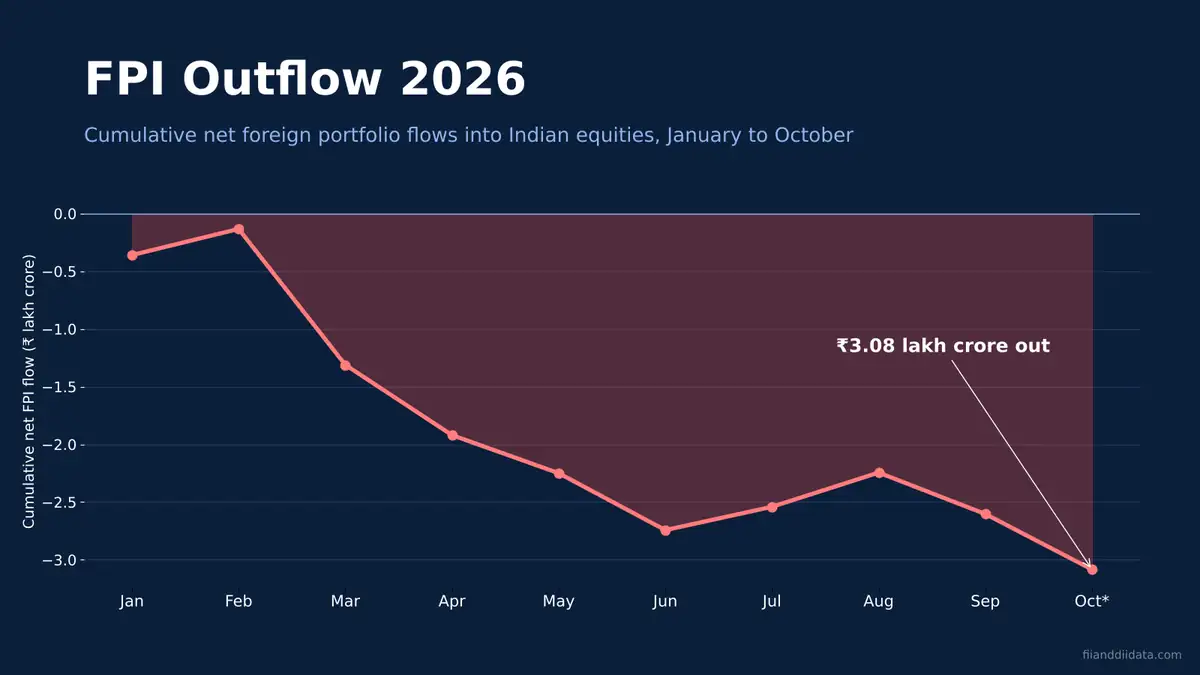
- FPI outflow / inflow: net money foreign portfolio investors take out of or bring into India over a period. FPI outflow 2026.
- NSDL FPI data: the depository’s official record of FPI investment, including IPOs and debt.
- SIP inflow: money investors put into mutual funds every month through systematic investment plans. Latest SIP data.
- MSCI rebalancing: MSCI’s periodic change of index members and weights, which triggers passive FII buying or selling.
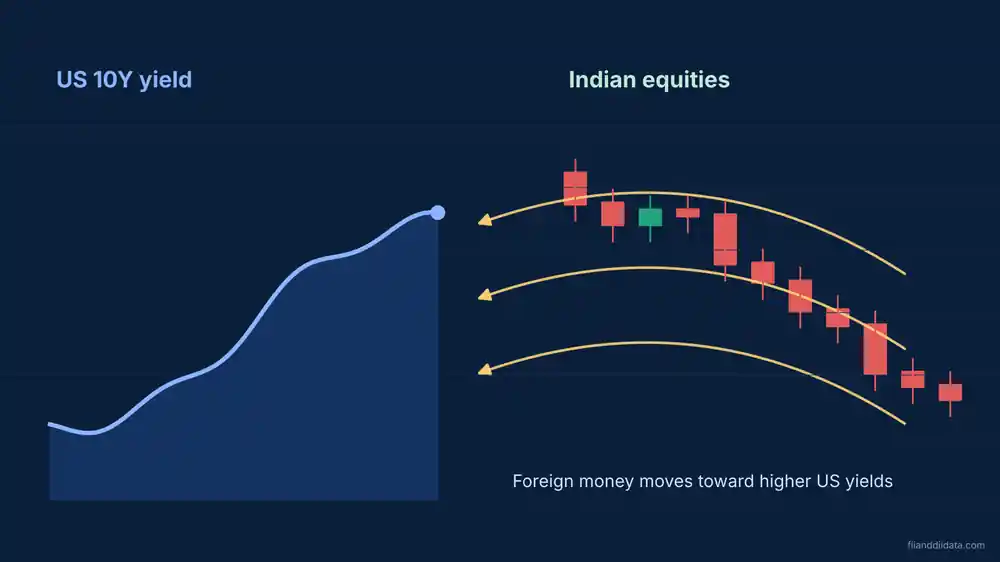
- Dollar index (DXY): the value of the US dollar against six major currencies. A stronger dollar often pulls FII money out of emerging markets.
- Hot money: short-term foreign capital that moves quickly in and out of a market.
FII DII Glossary: FAQs
What is the difference between FII and FPI?
There is no practical difference in market data. FPI is the official SEBI term that replaced FII in 2014, and both refer to foreign portfolio investors.
What does FII net sell mean?
It means FIIs sold more shares than they bought that day. The figure is gross sell minus gross buy, in ₹ crore.
What is open interest in simple words?
Open interest is the number of futures or options contracts that are still open and have not been closed or settled.
Disclaimer: For educational purposes only, not investment advice.