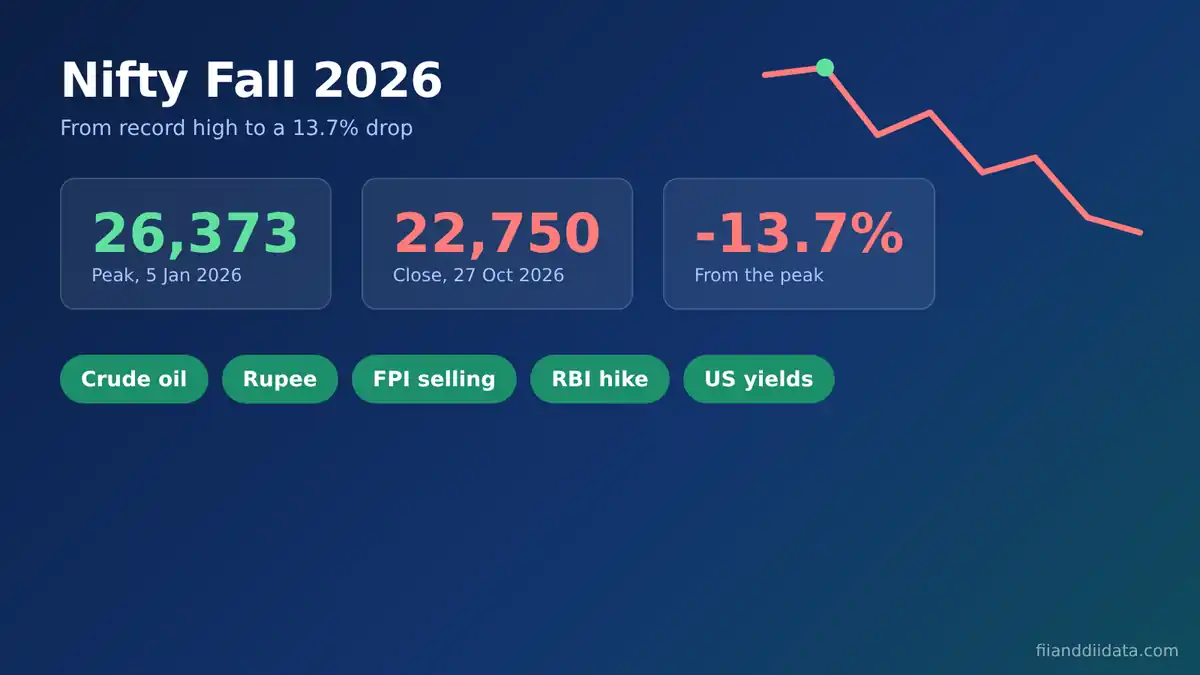
The main Nifty fall 2026 reason is a chain of shocks that hit at the same time: a crude oil spike from the West Asia war, record foreign selling, a weak rupee, an RBI rate hike and US bond yields above 5%. The Nifty 50 closed at 22,749.75 on 27 October 2026, about 13.7% below its 5 January record of 26,373.20. Here is what drove each leg of the fall, and the signals to watch for a turn.
Key Takeaways
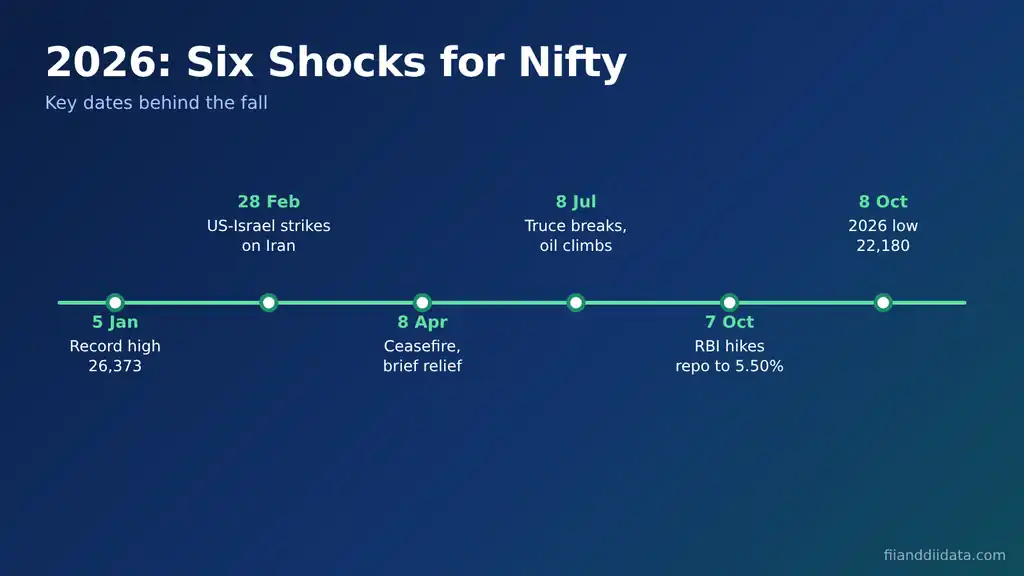
- Nifty is down 13.1% in 2026 as of 26 October and hit a 2026 intraday low of 22,179.90 on 8 October.
- Crude oil jumped after the US-Israel strikes on Iran on 28 February; Brent traded near $115 on 28 October.
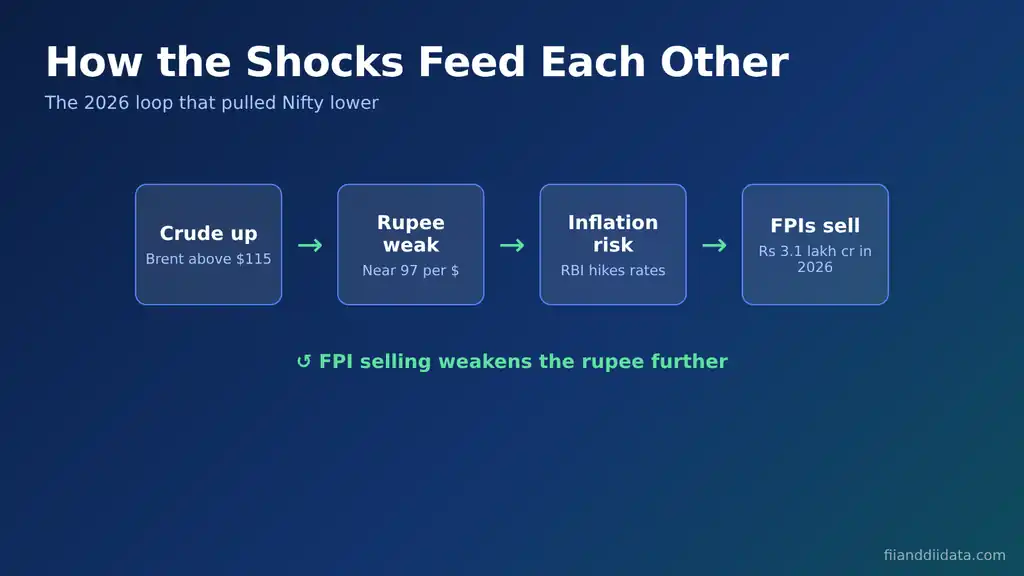
- Foreign portfolio investors (FPIs) sold about ₹3.1 lakh crore of Indian shares in 2026 up to 23 October.
- The RBI raised the repo rate to 5.50% on 7 October, its first hike in nearly four years.
- The 20% bear market line sits near 21,099; Nifty is close but has not crossed it.
In this article
- Nifty Fall 2026 at a Glance
- Reason 1: Crude Oil and the West Asia War
- Reason 2: Record FPI Selling
- Reasons 3 and 4: Weak Rupee and the RBI Rate Hike
- Reasons 5 and 6: US Yields, the Asia AI Trade and IT Stocks
- Worked Example: The Fall in Rupees and Dollars
- How to Track the Nifty Fall 2026 Reasons: A Weekly Checklist
- Common Mistakes in a Falling Market
- Frequently Asked Questions
- The Bottom Line
Nifty Fall 2026 at a Glance: The Numbers
The Nifty 50 touched an intraday record of 26,373.20 on 5 January 2026. By 27 October it had closed at 22,749.75, a drop of 3,623 points. On 28 October it opened lower again and traded near 22,566 in the first hour as Brent crude crossed $115.
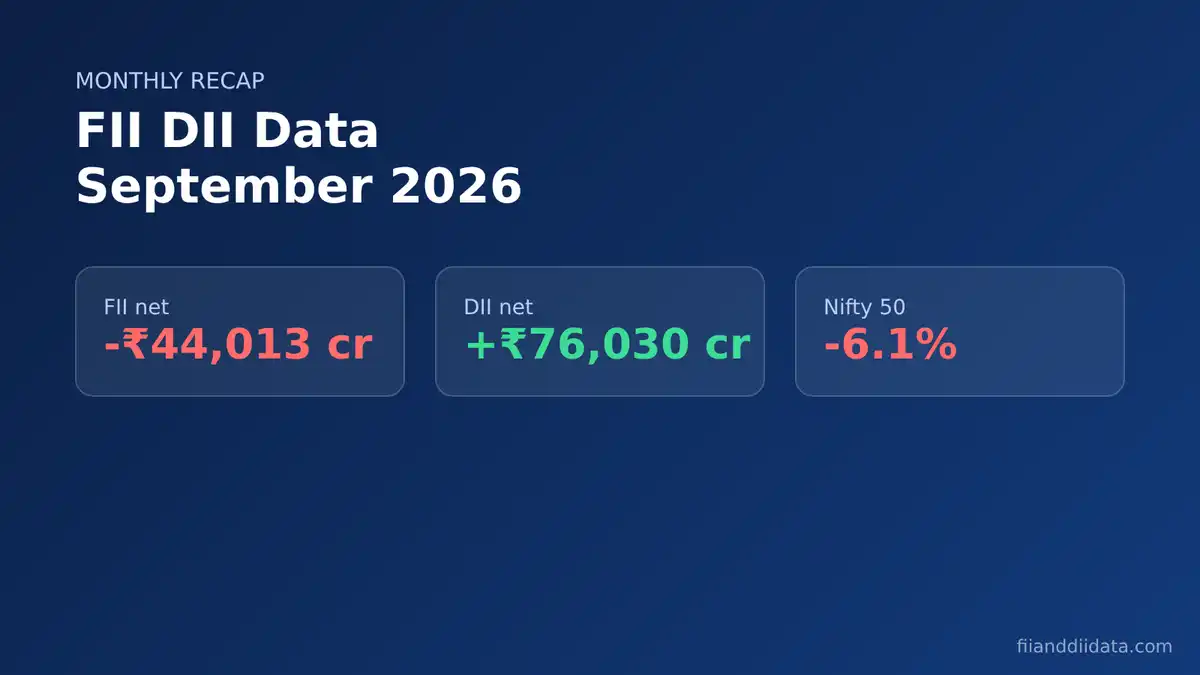
The fall was not a straight line. The index dropped sharply in March after the Iran war began, recovered after an April ceasefire, and then slid again from July when the truce broke down. September was the worst stretch: the September derivatives series fell 5.70%, and the index posted seven straight weekly losses, the longest run since 2020.
| Indicator | Level | Date |
|---|---|---|
| Nifty 50 record high (intraday) | 26,373.20 | 5 Jan 2026 |
| Nifty 50 2026 low (intraday) | 22,179.90 | 8 Oct 2026 |
| Nifty 50 close | 22,749.75 (-13.7% from peak) | 27 Oct 2026 |
| Nifty 50 year-to-date return | -13.1% | 26 Oct 2026 |
| FPI net selling in 2026 | about ₹3.1 lakh crore | to 23 Oct 2026 |
| Rupee vs US dollar, year to date | -5.6% | 26 Oct 2026 |
| RBI repo rate | 5.50% (+25 bps) | 7 Oct 2026 |
| Brent crude | $115.39 per barrel | 28 Oct 2026 |
| Nifty trailing P/E | 20.4 (from 24.45 on 31 Dec 2025) | 26 Oct 2026 |
Is the Nifty Fall 2026 a Bear Market?
Not yet. A bear market is usually defined as a 20% drop from a peak. For the Nifty that line is about 21,099. The 8 October low was 15.9% below the record, so the index is in a deep correction, not a formal bear market. The first and largest driver of that correction came from oil.
Reason 1: Crude Oil and the West Asia War
India imports most of the crude oil it uses, so a jump in oil prices works like a tax on the whole economy. On 28 February 2026, US and Israeli strikes on Iran started a war that disrupted shipping through the Strait of Hormuz. Oil moved from about $70 a barrel to a March average of $103, a rise of roughly 47%.
A ceasefire from 8 April gave the market a break, but the truce failed on 8 July after Iran struck commercial ships, and crude climbed back above $100. On 28 October Brent traded at $115.39, and Geojit’s V K Vijayakumar said the move above $115 was “bad news for the Indian economy and markets”.
How high oil hurts Nifty
- Inflation: fuel and transport costs feed into food and goods prices.
- Current account: a bigger import bill means more dollars leave India, which weakens the rupee.
- Company margins: paint, tyre, aviation, chemical and FMCG firms pay more for raw materials.
- Policy: higher inflation pushes the RBI towards rate hikes, not cuts.
Oil explains why the fall began. It does not explain why it lasted so long. For that, we need to look at who was selling.
Reason 2: Record FPI Selling, the Biggest Nifty Fall 2026 Reason
Foreign portfolio investors, also called FIIs, own a large share of Nifty companies, so their selling moves the index more than almost any other group. In 2026 they sold about ₹3.1 lakh crore of Indian equities up to 23 October, according to data cited by Moody’s Analytics. That is already well above the ₹1.82 lakh crore record outflow for the whole of FY26.
October has been one of the heaviest months. FPIs pulled out a net ₹48,056 crore in October up to 24 October, with ₹53,337 crore sold through the stock exchanges and ₹5,281 crore put back through IPOs, as reported by News On AIR on 25 October. We track the month-wise figures in our FPI outflow 2026 data, and the detailed motives in our report on why FIIs are selling Indian stocks, the core Nifty fall 2026 reason.
Why DII buying did not stop the fall
Domestic institutional investors (DIIs), led by mutual funds and insurers, bought about ₹6.83 lakh crore of shares in 2026 by mid-October. That money absorbed most of the foreign selling and prevented a crash. It could not lift prices, though, because large-cap stocks with heavy foreign ownership, such as private banks and IT companies, kept seeing supply. Our FII selling vs DII buying 2026 analysis shows the month-wise balance. For the full totals of each month, see our FII DII monthly data page.
Foreign selling and the rupee are tightly linked. When FPIs sell shares and take dollars home, the rupee weakens, and a weaker rupee then pushes more FPIs to sell. That loop is the next part of the story.
Reasons 3 and 4: Weak Rupee and the RBI Rate Hike
The rupee has lost about 5.6% against the dollar in 2026 up to 26 October and traded near 97 per dollar around 8 October. For a foreign fund, a falling rupee cuts returns even when Indian share prices hold steady, so currency weakness turns into more equity selling.
The second domestic shock came from the Reserve Bank of India. At its 5 to 7 October meeting, the Monetary Policy Committee voted unanimously to raise the repo rate by 25 basis points to 5.50% and changed its stance from neutral to “calibrated tightening”, as summarised by SCC Online. The RBI cited CPI inflation rising to 4.8% in August and projected 5.2% for FY27, with Q3 at 6.0%.
Markets had not fully priced a hike. On 8 October the Nifty fell 1.6% to 22,231.80, and the Nifty Midcap 150 and Smallcap 250 indices each lost 2.4%, as reported by Outlook Business. Higher rates raise borrowing costs and make bonds more attractive than stocks.
Reasons 5 and 6: US Yields, the Asia AI Trade and IT Stocks
The last two reasons came from outside India. First, the US 10-year Treasury yield rose above 5.20% by late September. When a risk-free US bond pays more than 5% in dollars, the extra return a foreign fund needs from Indian stocks goes up. We explain this link in detail in our guide to US bond yield impact on Indian market. India’s own 10-year yield also rose to 7.20%, its highest since April 2024.
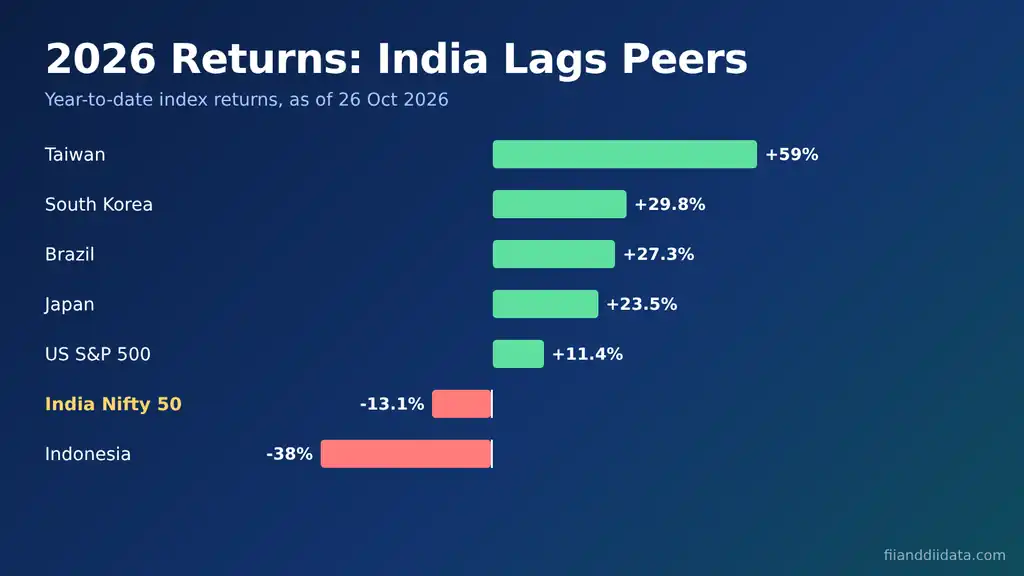
Second, global money chased the artificial intelligence boom in East Asia. As of 26 October, Taiwan’s index was up 59% in 2026 and South Korea’s KOSPI was up 29.8%, while the Nifty was down 13.1%. Only Indonesia, down 38%, did worse among the markets compared. India has few listed AI hardware firms, so funds sold Indian stocks to buy chipmakers.
The IT sector drag
Indian IT services stocks were among the hardest hit. The Nifty IT index fell 19.5% in February 2026, its steepest monthly drop since September 2008, according to Business Standard. On 28 October, Nifty IT was down another 3.77% in early trade, with Infosys, Tech Mahindra and HCL Technologies among the biggest losers.
Worked Example: The Fall in Rupees and Dollars
1. An Indian investor who bought at the peak. Suppose you put ₹10 lakh into a Nifty index fund at 26,373.20. At the 27 October close of 22,749.75, that holding is worth about ₹8.63 lakh, a paper loss of roughly ₹1.37 lakh before costs and dividends.
2. A foreign investor measuring in dollars. The Nifty is down 13.1% this year and the rupee has fallen 5.6%. In dollar terms the return is (1 – 0.131) x (1 – 0.056) – 1, which is about -17.9%. This is why currency weakness makes foreign funds far more nervous than the headline index move suggests.
3. Price vs earnings. The Nifty’s trailing P/E fell from 24.45 to 20.4, a 16.6% drop, while the index fell 13.1%. Dividing 0.869 by 0.834 gives about 1.04, which means trailing earnings rose roughly 4% this year. In plain terms, the market is falling because investors will pay less for each rupee of profit, not because profits have collapsed.
That third point matters for what comes next. A fall driven by lower valuations can reverse quickly if the shocks fade, so it pays to track the right signals every week.
How to Track the Nifty Fall 2026 Reasons: A Weekly Checklist
Each of the six reasons has a number you can check. If most of them turn at the same time, the odds of a lasting recovery improve.
- Brent crude: a sustained move back below $100 would ease inflation and rupee pressure.
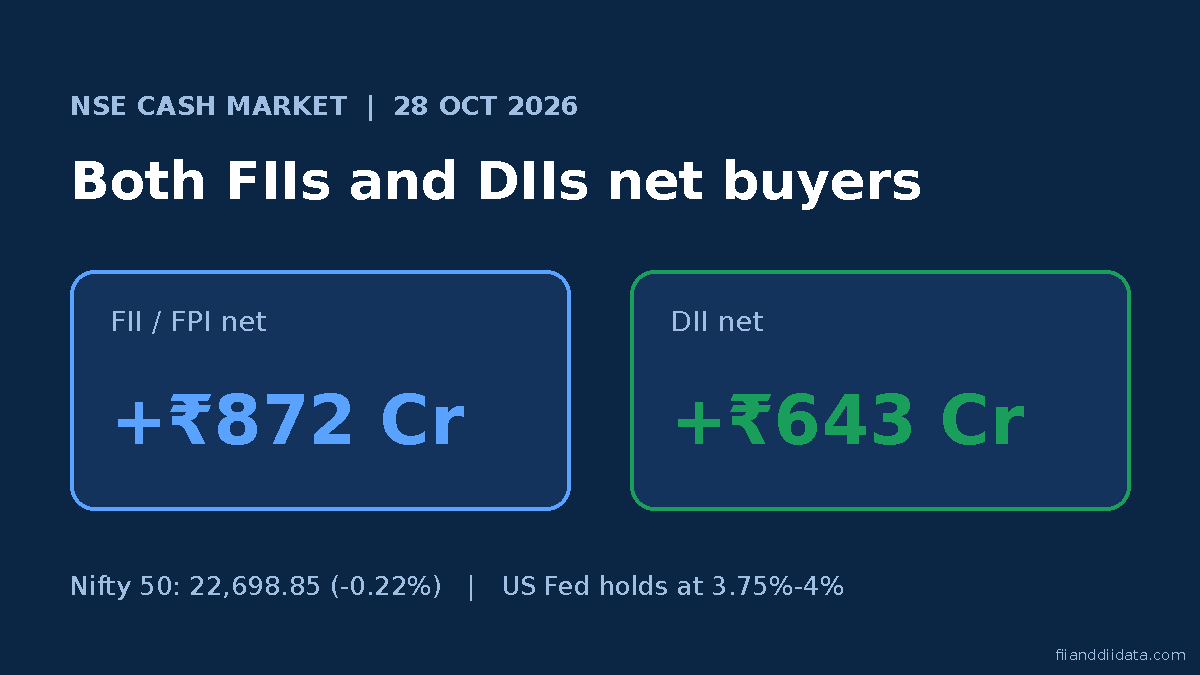
- Daily FII and DII flows: check the NSE provisional figures released around 6 PM IST on our FII DII data today page. Watch for several days of FII net buying in a row.
- USD/INR: a stable or stronger rupee reduces the loss foreign funds face in dollars.
- US 10-year yield and Fed policy: yields falling back below 5% would make Indian stocks look better on a relative basis.
- RBI signals: watch CPI prints and the next policy statement for any change in the “calibrated tightening” stance.
- Q2 FY27 earnings: guidance from banks and IT firms will show whether profits can keep growing.
- India VIX: a falling VIX shows traders expect calmer moves ahead.
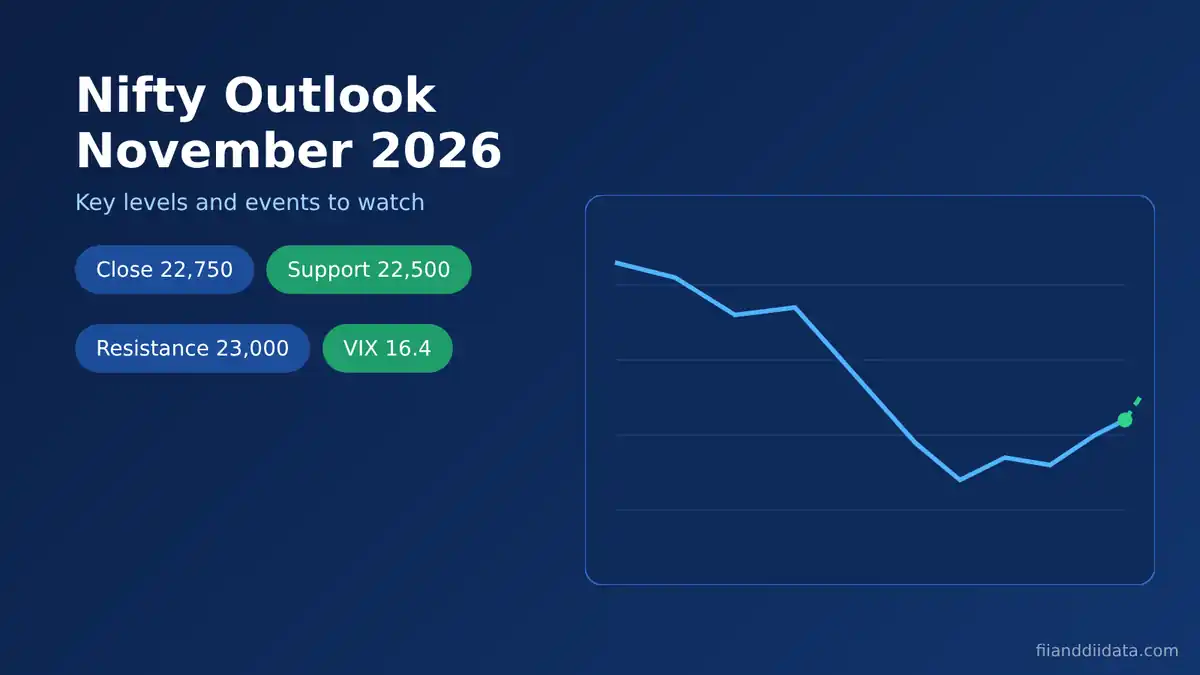
For a view of the key levels and scheduled events for the coming weeks, see our Nifty outlook for November 2026. Knowing what to watch is half the job; the other half is avoiding the usual errors.
Common Mistakes Investors Make in a Falling Market
- Blaming one cause. FII selling is the most visible reason, but it is a symptom of oil, the rupee and global yields. Fixing one alone may not end the fall.
- Reading a few days of FII buying as a turn. FPIs were net buyers on two trading days in the week to 24 October, yet the Nifty kept sliding into 28 October. Look for a trend over weeks, not days.
- Stopping SIPs at low prices. Monthly investing buys more units when prices are low. Stopping now locks in the worst part of the cycle.
- Ignoring position size. Large F&O positions on margin can wipe out capital in a fast fall.
- Guessing the bottom. Nobody can call the exact low. Staggered buying works better than one large bet.
With the causes and the checklist clear, the common questions readers ask about this fall have clear answers.
Frequently Asked Questions
What is the main Nifty fall 2026 reason?
There is no single cause. The fall came from six linked shocks: a crude oil spike after the West Asia war began on 28 February, record FPI selling of about ₹3.1 lakh crore up to 23 October, a rupee down 5.6% this year, the RBI rate hike to 5.50% on 7 October, US 10-year yields above 5.2%, and global money moving to AI-linked markets in Taiwan and Korea.
How much has Nifty fallen from its all-time high?
The Nifty 50 hit an intraday record of 26,373.20 on 5 January 2026. It closed at 22,749.75 on 27 October 2026, about 13.7% lower. Its 2026 intraday low was 22,179.90 on 8 October, about 15.9% below the peak.
Is Nifty in a bear market in 2026?
Not by the usual definition. A bear market means a fall of 20% or more from the peak, which for Nifty is about 21,099. The index is in a deep correction but has stayed above that level so far.
Why are FIIs selling Indian stocks?
Foreign investors cite high crude prices, a weak rupee that cuts their dollar returns, US bond yields above 5%, India’s valuation premium and better returns in AI-linked Asian markets. Their selling in 2026 has already exceeded the full-year FY26 record.
When will the Nifty fall stop?
No one can give a date. A lasting recovery usually needs several drivers to turn together, such as crude falling below $100, a steadier rupee, lower US yields and a run of FII net buying days. Track these weekly rather than trying to predict the exact bottom.
The Bottom Line
The Nifty did not fall in 2026 because Indian companies stopped making money. Trailing earnings are up about 4% this year. It fell because an oil shock, a weak rupee, an RBI hike and 5% US yields made foreign investors demand a lower price for Indian stocks, while AI-linked markets in Asia offered faster gains.
That also means the fall can ease if these pressures fade, but none of them has clearly turned yet. Brent is above $115, the rupee is near record lows and FPIs are still net sellers for October. Strong DII buying has kept the decline orderly and the index above its bear market line.
A practical next step: bookmark our FII and DII data dashboard and check the seven signals in the checklist each Friday. You can find more market explainers on the FIIAndDIIData blog.
Sources: Moody’s Analytics via TradingView (26 Oct 2026); News On AIR (25 Oct 2026); SCC Online, RBI policy summary (9 Oct 2026); Outlook Business (8 Oct 2026); ANI market report (28 Oct 2026); Goodreturns (1 Oct 2026); Outlook Money (30 Sep 2026); Angel One (13 Oct 2026); Business Standard (30 Mar 2026).
Disclaimer: This article is for educational purposes only and is not investment advice. Please consult a SEBI-registered advisor before making investment decisions.