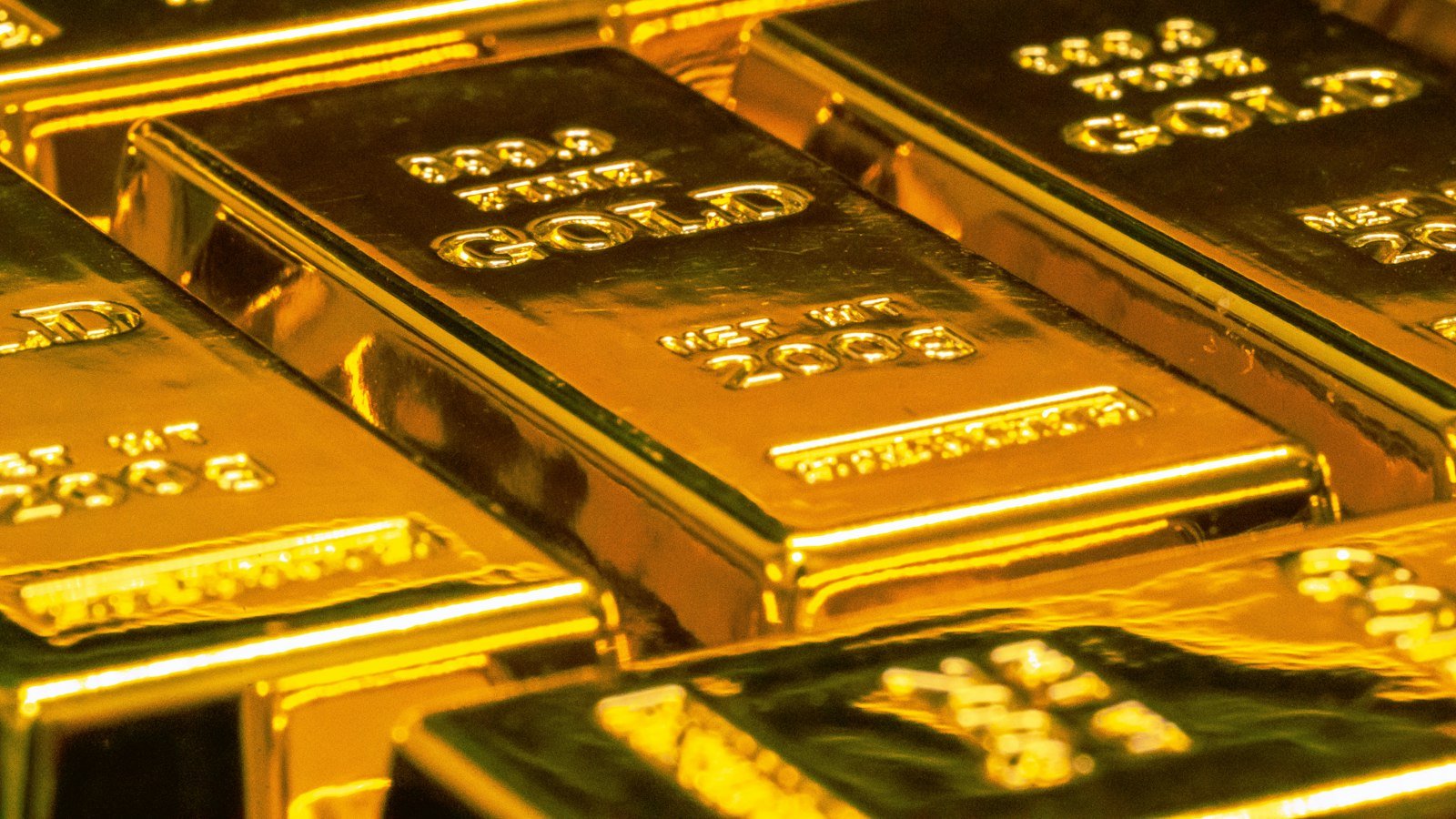
Gold ETF units let you own the price of gold through your demat account, without buying coins or bars. A gold ETF is a fund listed on NSE and BSE that holds physical gold and trades like a share during market hours. This guide explains how it works in India, what it costs, how gains are taxed and which risks to check before you buy.
Key Takeaways
- A gold ETF is a listed fund that tracks the domestic gold price, and you trade it through a demat and trading account.
- Your return is the gold price move minus the expense ratio, tracking error, brokerage and tax.
- Units held for more than 12 months are taxed as long term at 12.5 percent plus cess, with no indexation.
- SEBI changed how gold held by funds is valued from 1 April 2026, and new ETF trading norms followed in September 2026.
- Gold pays no dividend or interest, so any gain depends only on the price you sell at.
- What is a gold ETF?
- How to buy a gold ETF in India
- Costs of holding gold through a fund
- Gold ETF tax in India
- ETF vs physical gold vs digital gold
- Risks and common mistakes
- Worked example: returns and tax
- Pros and cons of gold ETF
- FAQ
- The Bottom Line
What Is a Gold ETF?
A gold ETF, short for gold exchange traded fund, is a mutual fund scheme whose units are listed on the stock exchange. The fund buys physical gold of high purity and aims to move in line with the domestic gold price, so each unit is a small share of that gold. Investor education material describes the metal as 99.5 percent pure bars; check each scheme’s offer document for the exact standard.
Because the units are listed, you need a demat account and a trading account with a broker. You trade at the market price on screen, which can differ slightly from the net asset value (NAV), the per-unit value of the fund’s holdings. The fund house, called an asset management company (AMC), publishes the NAV daily, and SEBI regulates these schemes.
How a gold ETF tracks the gold price
The fund is passive. The manager does not try to beat gold; the job is to hold it and mirror its price. The annual expense ratio (the fee) and tracking error (the gap between the fund’s return and the gold price) pull results slightly below gold, and they add up over many years.
Units, purity and redemption in a gold ETF
Many schemes describe one unit as roughly one gram of gold, but unit sizes differ, so read the factsheet before comparing prices. Small investors sell on the exchange and receive cash. Physical delivery is possible only in large creation units, commonly 1 kg, which are meant for institutions.

How to Buy a Gold ETF in India
Buying works like buying a share. You place an order on NSE or BSE through your broker, the units reach your demat account after settlement, and you can sell on any trading day when buyers are available. Our guide to NSE vs BSE explains how the two exchanges differ.
Steps to buy a gold ETF
- Open a demat and trading account with a SEBI-registered broker if you do not have one.
- Search for the scheme name on your trading app and open its page.
- Check the traded volume, the gap between the buy and sell price, and the scheme size.
- Compare the market price with the NAV or the indicative NAV shown by your broker.
- Place a limit order at the price you accept rather than a market order, especially when volumes are thin.
- Confirm that the units reach your demat account after settlement.
Before you buy, check the expense ratio in the factsheet, the daily traded volume, the tracking record and the tax rules for your holding period. If you do not want a demat account, some fund houses offer gold fund of funds that invest in the ETF for you and allow SIPs. They add a second layer of expenses. Our look at the SIP stoppage ratio shows how many investors pause SIPs, which is worth knowing before you start one.
Costs of Holding Gold Through a Fund
This type of fund is cheaper than most active funds but not free. The table lists the charges between you and the gold price. We have not quoted percentages because they vary by scheme and broker, so read current numbers from the official documents.
| Cost | Who charges it | Where to check it |
|---|---|---|
| Expense ratio | The fund house, taken from the fund’s assets | Scheme factsheet and the AMFI website |
| Brokerage | Your broker, on each buy and sell | Broker charges page |
| Demat and other account charges | Depository participant | Broker charges page |
| Bid-ask gap | The market, when buyers and sellers are far apart | Live order book on your trading app |
| Capital gains tax | Income Tax Department, on profit when you sell | Income Tax Department website |
Expense ratio and tracking error in a gold ETF
The expense ratio is deducted inside the NAV, so you never see a separate bill, yet it trims returns every year. A scheme with a low fee but poor tracking can still lag gold, so compare both over a few years. Scheme data is available on the AMFI website.
What changed in 2026 for gold ETF valuation and trading
Reports on a SEBI circular say that from 1 April 2026 funds must value physical gold using polled spot prices published by recognised stock exchanges, instead of international London bullion benchmarks adjusted for currency, duty and other costs. Industry participants expect this to narrow gaps between ETF NAVs and domestic gold prices.
SEBI also set a new ETF trading framework. Reports say it took effect on 7 September 2026, after an earlier date of 1 September was extended, and covers base prices, a pre-open call auction and dynamic price bands. For commodity ETFs such as gold, reports describe an initial 6 percent band that can widen in steps. This concerns how units trade, not the gold held. Confirm details on the SEBI and NSE circulars.
Gold ETF Tax in India
Tax depends on how long you hold the units before selling. The rules below follow the Finance (No. 2) Act, 2024 changes as described by tax and broker resources. Rules can change in any Budget, so confirm on the Income Tax Department website or with a tax professional.
- Held for 12 months or less: the gain is short term and is added to your income, so it is taxed at your slab rate plus cess.
- Held for more than 12 months: the gain is long term and is taxed at a flat 12.5 percent plus 4 percent cess. Surcharge can apply at high income levels.
- Indexation: not available for either case. The gain is the sale value minus your actual cost.
- Annual exemption: the exemption of ₹1.25 lakh applies to equity-oriented funds. A gold ETF is not equity-oriented, so it is not expected to qualify.
The worked example below turns these rules into rupees using hypothetical numbers.
ETF vs Physical Gold vs Digital Gold: How They Compare
Gold can be held in several ways, each with a different mix of cost, convenience and risk. Our guide to buying digital gold on PhonePe covers one app-based route.
| Point | Gold ETF | Physical gold | Digital gold | Gold fund of funds |
|---|---|---|---|---|
| Where it is held | Demat account | Your home or a locker | Seller’s vault partner | Mutual fund account |
| How you buy | Broker on NSE or BSE | Jeweller or bank | Mobile app | AMC or distributor |
| Making charges | None | Usually apply on jewellery | None, but a buy-sell spread applies | None |
| Storage worry | None | Theft and locker fees | Depends on the provider | None |
| Needs a demat account | Yes | No | No | No |
No option wins on every point. The listed fund suits people who already use a demat account and want low-friction exposure. Jewellery serves uses a fund cannot, such as a wedding gift. Digital gold and fund of funds suit small regular purchases without a broker.

Risks and Common Mistakes
Gold is often called a safe asset, but its price still rises and falls, sometimes sharply. In India the rupee price also depends on the exchange rate. Our note on the dollar index impact on Nifty shows how currency swings travel through Indian markets.
- Expecting income. Gold pays no dividend or interest. Your only gain is the difference between your buy and sell price.
- Ignoring liquidity. A thinly traded fund can have a wide buy-sell gap, which acts like an extra fee. Use limit orders.
- Comparing only expense ratios. Tracking error and liquidity matter just as much.
- Forgetting the holding period. Selling a few days before 12 months pass can change the tax rate noticeably.
- Putting too much in gold. A single asset can disappoint for years. Decide your share of gold in advance.
The monthly AMFI release also reports category-wise inflows, and our read of mutual fund equity inflow in October 2026 shows how to read those numbers. Institutional flows are a separate topic; follow them on our FII and DII data page after market close.
Worked Example: Returns and Tax on 625 Units
Suppose a gold ETF unit trades at ₹80 and you invest ₹50,000. Two years later, suppose it trades at ₹100. These prices are hypothetical, chosen only for learning, and brokerage is ignored to keep the arithmetic clear.
Step 1: Units bought
Units = ₹50,000 divided by ₹80 = 625 units.
Step 2: Sale value and gain
Sale value = 625 units x ₹100 = ₹62,500. Gain = ₹62,500 minus ₹50,000 = ₹12,500, which is 25 percent on the amount invested.
Step 3: Tax if held for more than 12 months
Long-term tax = 12.5 percent of ₹12,500 = ₹1,562.50. Cess = 4 percent of ₹1,562.50 = ₹62.50. Total tax = ₹1,625, which is 13 percent of the gain. You keep ₹62,500 minus ₹1,625 = ₹60,875, so profit after tax is ₹10,875.
Step 4: Tax if sold within 12 months
Now suppose the same gain came in under 12 months and your slab rate is a hypothetical 20 percent. Tax = 20 percent of ₹12,500 = ₹2,500. Cess = 4 percent of ₹2,500 = ₹100. Total tax = ₹2,600. You keep ₹62,500 minus ₹2,600 = ₹59,900, so profit after tax is ₹9,900.
Step 5: What the expense ratio does
Suppose gold rises 10 percent in a year and the fund charges a hypothetical 0.50 percent. The fund’s return is about (1.10 x 0.995) minus 1 = 9.45 percent. On a ₹1,00,000 holding, 0.50 percent is about ₹500 a year in fees, before any tracking error.
| Item | Held over 12 months | Sold within 12 months |
|---|---|---|
| Amount invested | ₹50,000 | ₹50,000 |
| Sale value | ₹62,500 | ₹62,500 |
| Gain | ₹12,500 | ₹12,500 |
| Tax including cess | ₹1,625 | ₹2,600 |
| Profit after tax | ₹10,875 | ₹9,900 |
The same gain leaves ₹975 more in your pocket when the holding period crosses 12 months. That difference is the reason to know your purchase date before you sell.
Pros and Cons of Gold ETF
| Pros | Cons |
|---|---|
| No making charges, storage or purity worries | Needs a demat and trading account |
| Trades on NSE and BSE during market hours | Thin volumes in some schemes can widen the buy-sell gap |
| Small ticket size, you can buy a few units | Expense ratio and tracking error reduce returns slightly |
| Fund is regulated by SEBI and valued daily | Gains are taxed, and long-term gains get no indexation |
| Easy to sell and receive cash in your bank account | Pays no dividend or interest, so returns depend only on price |
FAQ
What is a gold ETF in simple words?
A gold ETF is a fund listed on NSE and BSE that holds physical gold and tracks its domestic price. You buy and sell its units through a demat account like a share, and you do not handle any physical gold.
How is a gold ETF taxed in India?
Units held for 12 months or less are taxed at your slab rate plus cess. Units held for more than 12 months are taxed at 12.5 percent plus 4 percent cess, with no indexation. Rules can change, so check the Income Tax Department website.
Is a gold ETF better than physical gold?
It depends on your goal. A gold ETF avoids making charges and storage risk and is easy to sell, but it needs a demat account and cannot be worn or gifted. Compare the costs and your needs before you choose.
Can I invest in gold without a demat account?
Yes. Some fund houses offer gold fund of funds that invest in a gold ETF for you and allow SIPs without a demat account. They add a second layer of expenses, so check the total cost.
Does a gold ETF pay dividends or interest?
No. Gold does not generate income, so your return comes only from the change in unit price between your purchase and sale, minus costs and tax.
The Bottom Line
A gold ETF is a simple, low-friction way to hold gold through a demat account. It removes making charges and storage worries, but it still carries price risk, small fund costs and capital gains tax. Your holding period decides the tax rate, and the 12-month mark is the line to watch.
A practical next step is to open the factsheets of two schemes, note the expense ratio, tracking error and daily volume, and compare them side by side. For more explainers, browse the blog section, and read the current scheme documents before you invest a single rupee.
Sources: SEBI for fund regulation; NSE India for listed ETF details; AMFI for scheme data; Income Tax Department for capital gains rules. Valuation and trading changes are based on press reports on SEBI circulars (Business Today, 26 February 2026; Kotak Neo and Upstox, 2026). Worked example numbers were calculated for this article with hypothetical inputs.
Disclaimer: This article is for educational purposes only and is not investment advice. Gold prices can fall, and tax rules can change. Please consult a SEBI-registered advisor and a tax professional before making investment decisions.