Will FII come back to India? Yes, history says foreign money does return, but only when US bond yields, crude oil and the rupee turn in India’s favour, and that has not fully happened yet. Foreign portfolio investors have pulled about ₹3.08 lakh crore out of Indian equities in 2026, a record, yet PTI reported on 25 October that their selling slowed sharply last week. Here is what would bring them back, and how to spot it early.
Key Takeaways
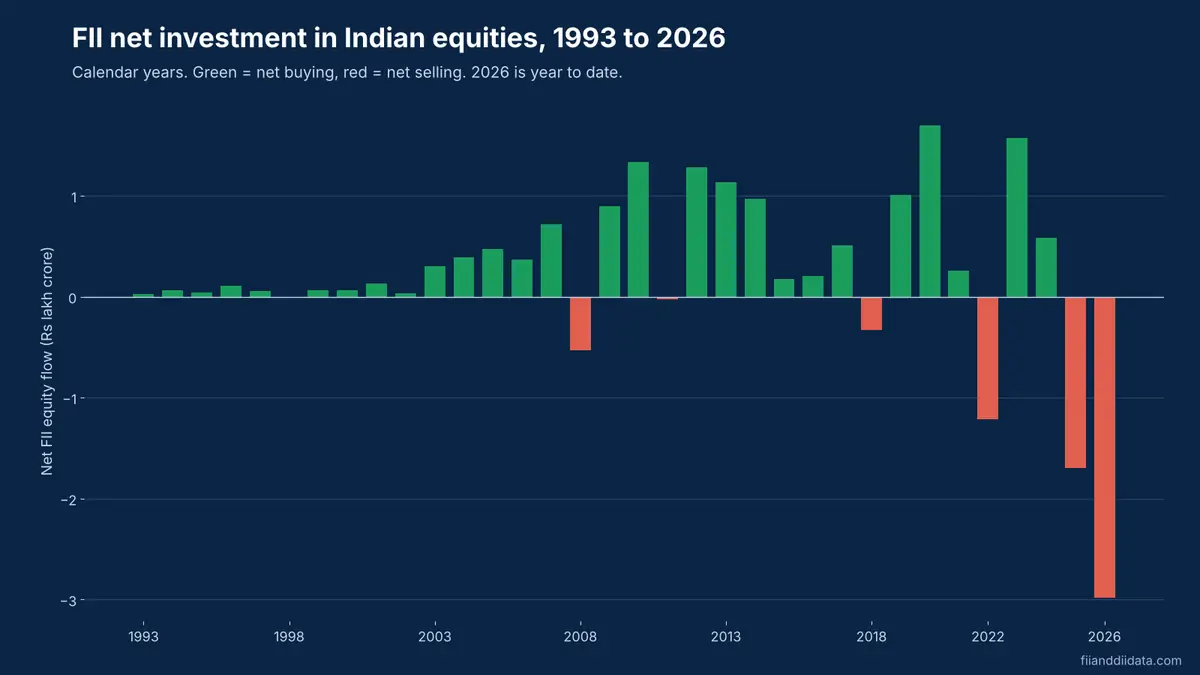
- FPIs have sold a record ₹3.08 lakh crore of Indian equities in 2026 so far (PTI, 25 October 2026).
- Past exits in 2020 and 2022 were followed by strong buying within a year, once yields and valuations turned.
- Three return signals are moving the right way: easing US yields, a firmer rupee and record-low foreign ownership.
- Crude near $114 a barrel and the global AI trade are the two biggest hurdles right now.
- Bernstein expects flat to modestly positive FII flows over the next 12 months, so a return may be gradual.
In this article:
- Will FII Come Back to India? The Short Answer
- Where the FII Exit Stands in October 2026
- Will FII Come Back to India? What History Says
- 6 Triggers That Could Bring FIIs Back to India
- Worked Example: Why a 5% US Yield Keeps FIIs Away
- The Case For and Against an FII Comeback
- How to Track an FII Return: A Weekly Checklist
- Common Mistakes When Calling an FII Comeback
- FAQ
- The Bottom Line
Will FII Come Back to India? The Short Answer
FII stands for foreign institutional investor, the older name for what SEBI now calls a foreign portfolio investor (FPI). These are overseas pension funds, mutual funds, sovereign funds and hedge funds that buy listed Indian shares and bonds. Their money leaves when returns elsewhere look better and comes back when India looks cheap or safe again.
So the real question is not whether FIIs will come back, but when, and what has to change first. Speaking at the BS BFSI Insight Summit on 26 October 2026, Standard Chartered India CEO PD Singh said it was “probably too early to say,” but that stabilisation of outflows had probably already happened. He tied any return to calmer global conditions and India’s valuations looking better than those of global peers.
Our view: a slow return is possible, a rush back is not yet visible in the data. To judge which way it goes, start with where the numbers stand today.
Where the FII Exit Stands in October 2026
The table pulls together the readings that matter most for an FII return, each with the date it was reported. For the full month-by-month record, see our FPI outflow 2026 month-wise data.
| Indicator | Latest reading | Reported on |
|---|---|---|
| Net FPI outflow from equities, 2026 | About ₹3.08 lakh crore (record) | 25 Oct 2026 |
| FPI selling in October so far | ₹48,056 crore | 25 Oct 2026 |
| US 10-year Treasury yield | About 5%, down from 5.36% | 25 Oct 2026 |
| Brent crude | About $114 a barrel | 25 Oct 2026 |
| Rupee | 94.94 per dollar, firmer | 25 Oct 2026 |
| DII net buying, 2026 | ₹6.83 lakh crore | 13 Oct 2026 |
| Nifty 50, year to date | Down 14.4% | 13 Oct 2026 |
| FII ownership of Nifty 500 firms | 17%, a record low | June 2026 quarter |
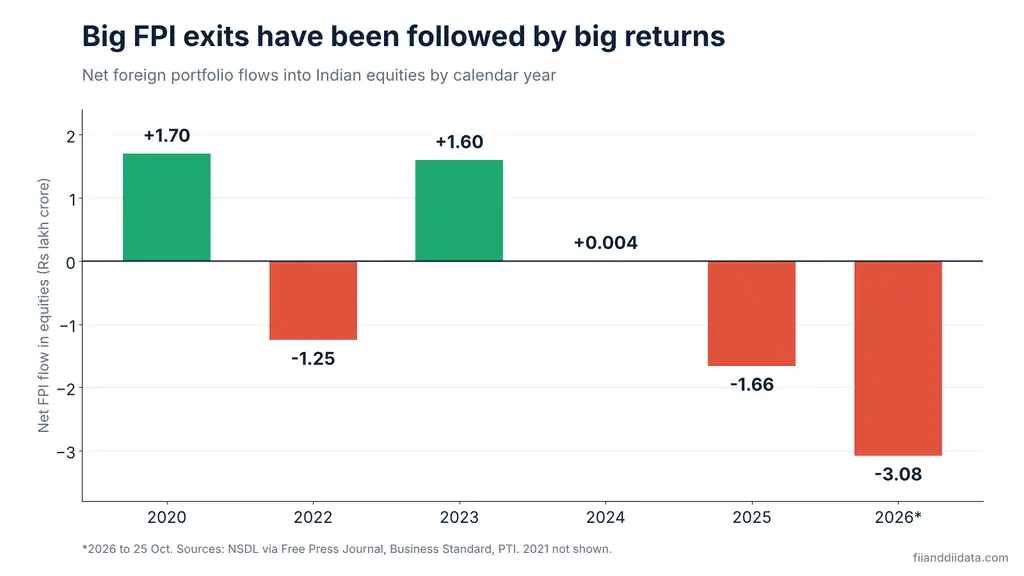
Two things stand out. The exit is the largest on record, almost double the ₹1.66 lakh crore that left in 2025. And foreign funds now own a smaller slice of Indian companies than domestic institutions do. A Motilal Oswal report showed DII ownership in Nifty 500 firms at a record 21% in June 2026, against 17% for FIIs. Low ownership matters, because past exits ended in a similar place.
Will FII Come Back to India? What History Says
India has seen heavy foreign selling before. Each time, the money came back within about a year, once the global backdrop turned.
2020: From record selling to record buying in eight months
In March 2020, as Covid hit, FPIs pulled ₹61,973 crore out of Indian equities, part of a record ₹1.18 lakh crore withdrawal across equity and debt (Business Standard, 5 April 2020). By November they were putting in ₹60,358 crore, and December brought a fresh record of ₹62,016 crore. Full-year 2020 ended with net FPI equity buying of over ₹1.70 lakh crore. Free Press Journal, reporting on 3 January 2021, linked the turn to global stimulus, a weak US dollar and low Indian valuations.
2022 to 2023: Will FII come back to India after a full year of selling?
FPIs were net sellers of ₹1.25 lakh crore in 2022. Selling continued in January and February 2023, while the market fell nearly 10% between December 2022 and March 2023. Then valuations eased, earnings held up and China’s slowdown pushed money towards India. FPIs bought about ₹1.7 lakh crore between March and August 2023, according to Business Standard (25 December 2023).
The same report noted that the US 10-year yield hit 5.01% on 23 October 2023 and FPIs sold. In November, buying returned once markets believed the US Federal Reserve had finished raising rates. Three years later, yields are again near 5%. The lesson is simple: the turn in foreign flows usually follows the peak in US yields, not the bottom in Indian prices. With that pattern in mind, here are the six triggers to watch now.
6 Triggers That Could Bring FIIs Back to India
1. US bond yields falling below 5%
A safe dollar return near 5% competes directly with Indian shares. Geojit’s V K Vijayakumar linked the slower selling in late October to the 10-year yield easing from 5.36% to around 5%. A clear move lower would be the single biggest help. Our explainer on how US bond yields affect the Indian market covers the mechanics.
2. Crude oil cooling from $114
India imports most of its oil. Choice Wealth’s Dheeraj Gaur cited crude near $114 a barrel amid Middle East tensions as a main reason for selling. High oil widens the trade deficit, lifts inflation and hurts the rupee, so all three FII worries move together.
3. A stable or firmer rupee
Foreign funds measure returns in dollars. The rupee firmed to 94.94 per dollar by 25 October, which is a small positive. A steady currency removes one layer of loss, as the worked example below shows.
4. Cheaper valuations and record-low ownership
With FII ownership of Nifty 500 firms at a record-low 17% in June 2026, global funds are already underweight India. Vijayakumar called large-cap valuations attractive in late October, and Citi India CEO K Balasubramanian said on 26 October that companies now listing are priced more attractively than 18 to 24 months ago. When funds are this underweight, even a neutral view can force some buying.
5. Earnings upgrades in the results season
Cheap stocks can stay cheap if profits keep missing. Weak earnings were among the reasons analysts gave for selling. Upgrades in Q2 FY27 results would give foreign funds a reason beyond price.
6. A pause in the global AI trade
Business Standard reported on 13 October that FPIs moved money into AI and semiconductor stocks in the US, Taiwan and Korea. India has few such listed companies. If that rally cools, some money may rotate back to markets like India. We list all the selling drivers in detail in our guide to when FIIs could come back to India and why they left. Of these six, the first is easiest to see in numbers.
Worked Example: Why a 5% US Yield Keeps FIIs Away
Here is a simple, illustrative calculation with rounded numbers.
- A US fund converts $1 million into rupees at ₹90 per dollar and gets ₹9 crore of Nifty stocks.
- Over a year, the Nifty rises 10%. The holding is now worth ₹9.9 crore.
- In the same year, the rupee loses 5% of its dollar value, so a dollar now costs about ₹94.74.
- The fund sells and converts back: ₹9.9 crore ÷ 94.74 = about $1.045 million, a 4.5% gain in dollars.
- A US 10-year Treasury near 5% would have paid more, with far less risk.
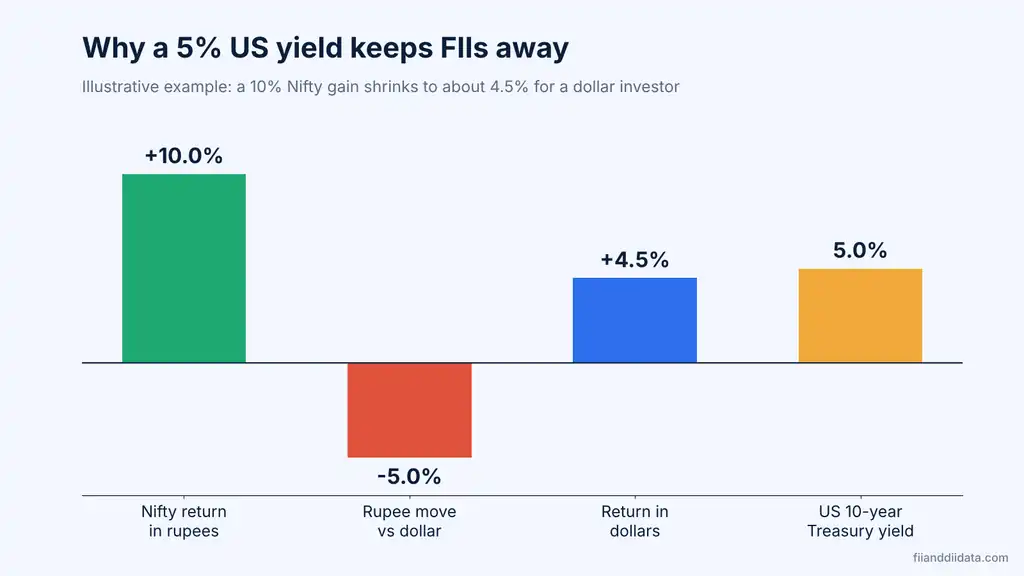
This is why an FII return needs more than a falling market. It needs a lower US yield, a steadier rupee, or expected Indian returns high enough to beat both. Analysts disagree on how soon that mix will arrive.
The Case For and Against an FII Comeback
| Case for an FII return | Case against an FII return |
|---|---|
| FII ownership of Nifty 500 firms at a record-low 17% leaves room to buy | Crude near $114 keeps pressure on inflation and the rupee |
| US 10-year yield has eased from 5.36% to about 5% | Bernstein sees flows only flat to modestly positive over 12 months |
| Rupee firmed to 94.94 per dollar | The AI trade in Korea, Taiwan and the US is still pulling capital |
| FPIs were net buyers on two days in the week to 23 October | Weak earnings, and high US rates that keep US assets attractive |
| Standard Chartered India CEO sees outflows stabilising (26 October) | FIIs may “return to trade” rather than invest for the long term |
The most cautious view comes from Bernstein. In a note covered by Business Standard on 21 September 2026, analysts Venugopal Garre and Nikhil Arela said FIIs have pulled nearly $40 billion from Indian equities over two years. They expect flows to be flat to modestly positive over the next 12 months, helped by easing headwinds rather than structural change. They also noted that foreign flows have typically run in cycles of two to three years of buying followed by about a year of lull.
On the other side, Trackk’s Vedant Gupte told PTI the selling may reflect rotation rather than lost confidence, given multi-year-low foreign ownership. Both views can be right: money can come back to trade before it comes back to stay. That makes tracking the data more useful than guessing.
How to Track an FII Return: A Weekly Checklist
Do not rely on one green day. Use this checklist each week to answer “will FII come back to India” with data rather than opinion, and look for several boxes turning at once.
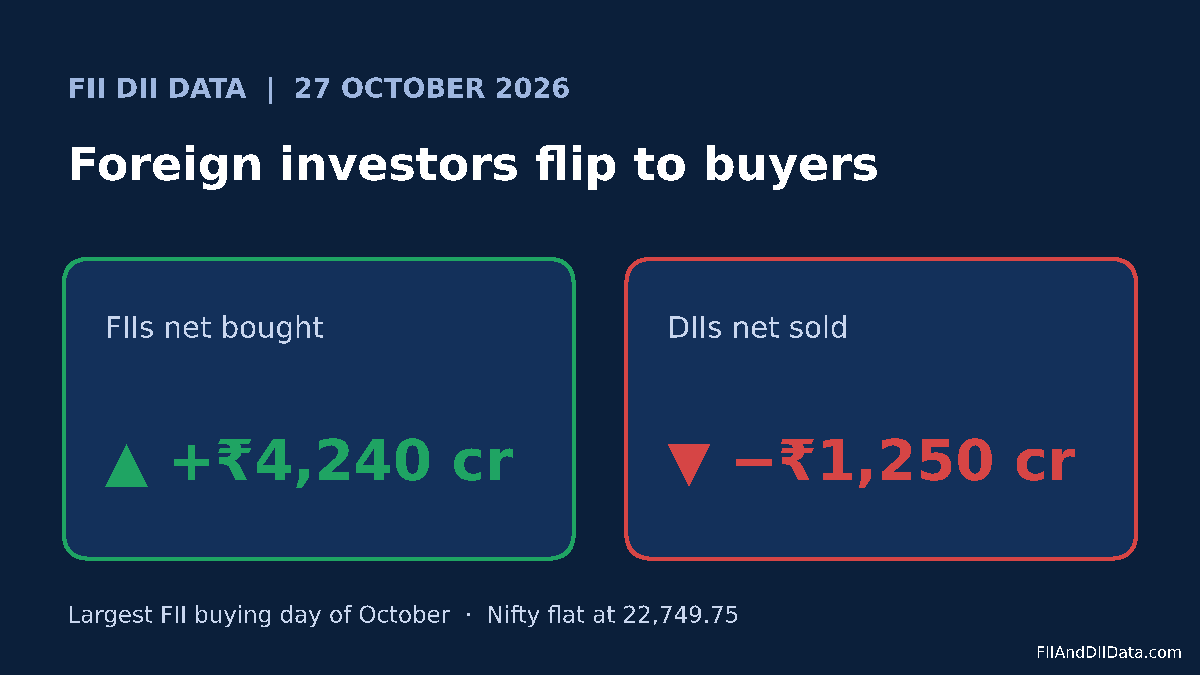
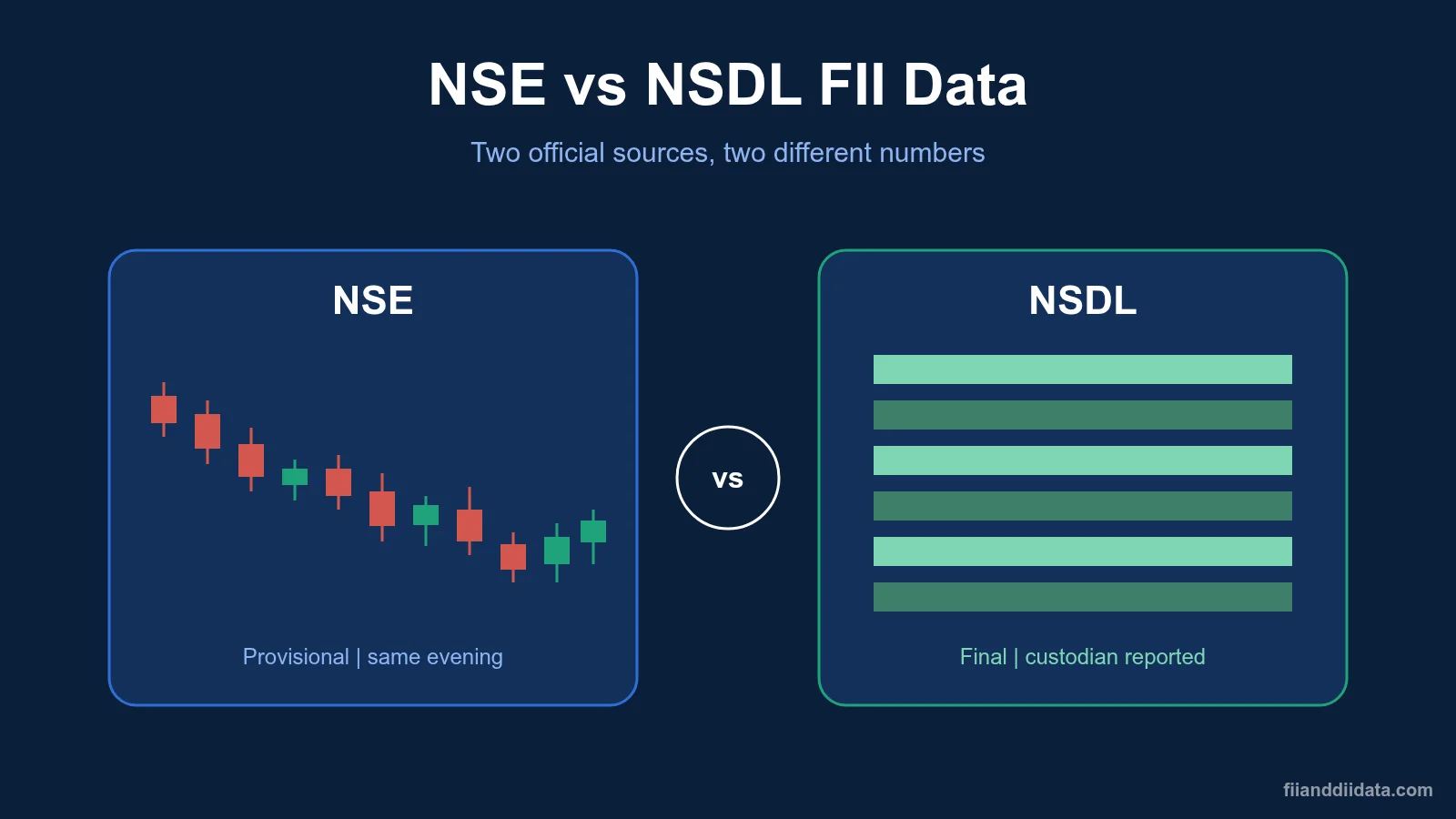
- Cash market: five or more straight sessions of net FII buying in the daily FII DII cash market summary. NSE releases provisional data around 6 PM IST on trading days.
- NSDL monthly data: inflows driven by exchange purchases, not only IPO and QIP money. NSDL’s final FPI figures arrive the next working day.
- Derivatives: FIIs cutting index futures shorts, visible in the FII long short ratio and the participant wise open interest data.
- US 10-year yield: holding clearly below 5%.
- Brent crude: back below $100 a barrel.
- Rupee and earnings: a stable rupee and more upgrades than downgrades in the results season.
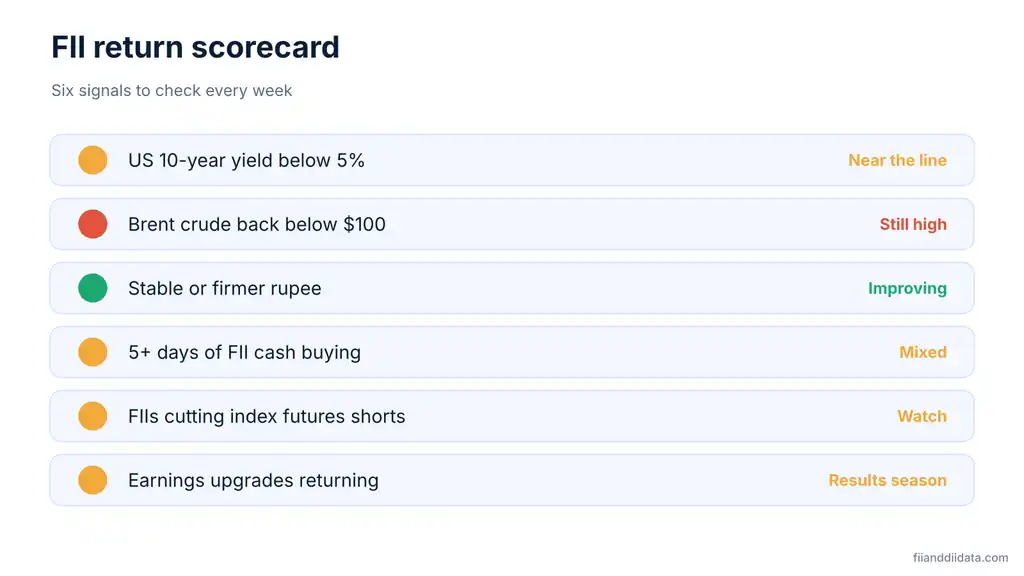
As of 25 October, yields and the rupee had moved the right way and crude had moved the wrong way. That is a mixed scorecard, not a buy signal. Even with a checklist, a few common errors trip people up.
Common Mistakes When Calling an FII Comeback
- Treating IPO money as a return. FPIs put ₹56,485 crore into primary deals in 2026 to 12 October while selling ₹3.64 lakh crore on exchanges (Business Standard, 13 October 2026). New issues do not lift listed index stocks.
- Mixing NSE and NSDL numbers. NSE shows only exchange trades; NSDL includes primary market deals. The totals rarely match.
- Reading one month as a trend. July and August 2026 brought ₹49,831 crore of buying, then September and October erased it.
- Ignoring short covering. A rally driven by FIIs buying back index futures can fade once the shorts are closed.
For daily numbers, charts and all our free tools, visit our FII and DII data home page. Below are the questions readers ask most often.
Frequently Asked Questions
Will FII come back to India in 2026?
FPI selling slowed sharply in the week to 23 October 2026, with net buying on two days, as US yields eased and the rupee firmed. A full return depends on US yields staying below 5%, crude cooling from about $114 and better earnings. Bernstein expects flat to modestly positive flows over the next 12 months.
Why are FIIs selling Indian stocks?
Analysts point to US 10-year yields near 5%, crude oil near $114 a barrel, a weak rupee earlier in the year, weak earnings and money moving into AI and chip stocks in the US, Taiwan and Korea.
How much money have FIIs pulled out of India in 2026?
A PTI report dated 25 October 2026 put net FPI outflows from Indian equities at about ₹3.08 lakh crore for 2026, a record and nearly double the ₹1.66 lakh crore that left in 2025.
Have FIIs come back after big selling before?
Yes. After heavy selling of ₹61,973 crore in March 2020, FPIs bought over ₹1.70 lakh crore in full-year 2020. After net selling of ₹1.25 lakh crore in 2022, they bought about ₹1.7 lakh crore between March and August 2023.
How can I check if FIIs are buying again?
Track the NSE provisional FII/DII cash data released around 6 PM IST on trading days, NSDL FPI data the next working day, and FII index futures positions in participant wise open interest. Look for several days of buying, not one.
The Bottom Line
Will FII come back to India? History says yes. The exits of 2020 and 2022 both turned into strong buying within months, once US yields peaked and Indian valuations eased. Today, foreign ownership is at a record low, yields have come off their highs and the rupee is steadier. Those are the early conditions of a turn.
The hurdles are real, though. Crude near $114, the AI trade abroad and weak earnings could keep any return slow and choppy, as Bernstein expects. Our practical next step: check the combined flow each evening on our FII DII data dashboard, and act only when several signals on the checklist turn together. You can find more explainers on our FII DII blog.
Sources: PTI via Millennium Post (25 October 2026); NSDL data via Business Standard (13 October 2026); Bernstein note via Business Standard (21 September 2026); BS BFSI Insight Summit report, Business Standard (26 October 2026); Business Standard (5 April 2020 and 25 December 2023); Free Press Journal (3 January 2021 and 3 August 2026).
Disclaimer: This article is for educational purposes only and is not investment advice. Please consult a SEBI-registered advisor before making investment decisions.